
Guide to gums and health
Bleeding gums: causes and signs of periodontitis
Bleeding gums have several causes. Usually the cause is inflammation from plaque along the gum line. Bleeding is not normal, even if it rarely hurts. This guide explains how to recognise periodontitis, what you can do yourself and when to have a check-up.
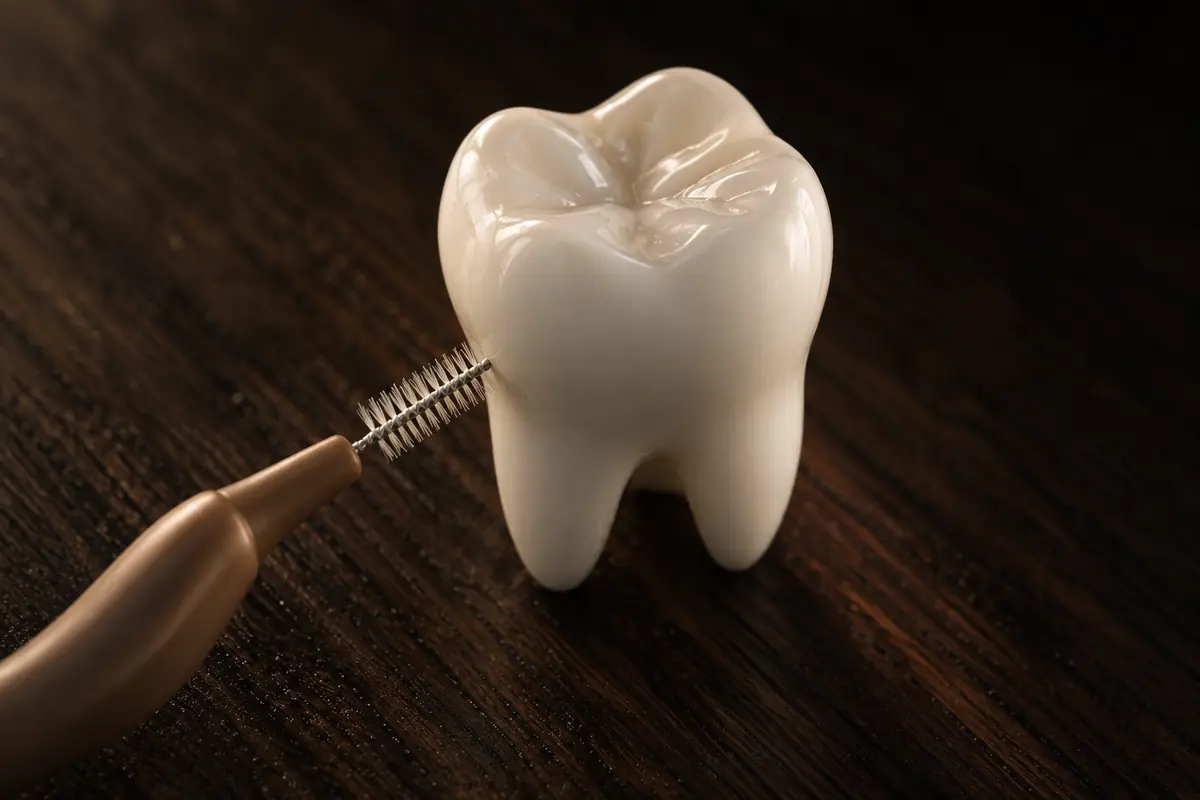
What healthy gums look like
Healthy gums surround your teeth and hold them in place. This helps to protect against tooth loss. Pain is not a good guide, because inflamed gums often do not hurt either. Look out for these signs instead:
- They are pink, not dark red.
- They are firm, not swollen.
- They fit closely around each tooth and fill the gaps between the teeth.
- They do not bleed when you brush or eat.
Common causes of bleeding gums
Often several causes come together. An examination shows which ones apply to you.
Plaque at the gum line
The most common cause is a film of bacteria on the teeth called plaque. It collects mainly where the tooth meets the gum. If it stays there, the gums can become inflamed within just a few days. Later it hardens into tartar, which can only be removed at a dental practice.
Brushing too hard or starting to floss
Hard bristles and a lot of pressure can injure the gums. If you have just started to floss, your gums will often bleed for the first few days. That is no reason to stop. It usually settles after about a week.
Pregnancy, hormones and medication
During pregnancy and puberty, hormones make the gums more prone to inflammation. Some medicines, for example for high blood pressure, can cause the gums to overgrow. Blood thinners can make bleeding gums more likely. Never stop taking a medicine on your own, though. Speak to your doctor instead.
Smoking and conditions such as diabetes
Smoking markedly increases the risk of periodontitis. Nicotine also narrows the blood vessels in the gums. This is why smokers' gums often barely bleed, even when they are inflamed. Diabetes and stress also make inflammation more likely. In rare cases, a blood clotting disorder is behind it.
Crowded teeth, overhanging fillings and wisdom teeth
Where teeth are crowded, plaque is more likely to stay behind. For more, see treatment for crowded teeth. Fillings or crowns with overhanging edges also trap plaque. The gum can swell at the very back of your mouth. A wisdom tooth that has not fully come through may be the cause. Read more about an inflamed wisdom tooth.
The difference between gingivitis and periodontitis
Gingivitis and periodontitis are often confused. Both are forms of gum disease. The difference matters, because only gingivitis can clear up completely.
Gingivitis affects only the gums
In gingivitis, the inflammation is limited to the gums. They are red and swollen and bleed easily. If plaque is removed regularly, gingivitis usually clears up. Otherwise it can spread.
Periodontitis damages what holds the tooth in place
In periodontitis, the inflammation spreads to the tissues that hold the tooth in place. Gum pockets form, and bacteria collect in them. The bone around the teeth breaks down, and teeth can become loose. Periodontitis does not heal on its own. When gingivitis is spotted early, it is less likely to turn into periodontitis.
Why periodontitis often causes no pain
Periodontitis usually develops slowly and does not hurt. Pain often starts only when pus forms or teeth become loose. So pay attention to warning signs, even when nothing hurts.
Signs and symptoms of gum disease
The symptoms of periodontitis come on slowly and at first resemble those of gingivitis. These two lists can help you assess your situation. They do not replace an examination.
Early warning signs
- Your gums bleed when you brush, floss or eat.
- Your gums are red or swollen.
- Bad breath or a bad taste in your mouth does not go away. This can point to plaque below the gum line.
Later warning signs
- Your gums recede, so your teeth look longer.
- Your teeth are sensitive near the gum line, for example to cold.
- Pus comes out at the gum line.
- Teeth become loose or shift.
- New gaps appear between your teeth.
- Chewing hurts.
Receding gums
When gums recede, parts of the tooth root are exposed. The teeth look longer. Near the gum line, they often react to cold, sweet foods or touch.
Possible causes of receding gums
- periodontitis
- scrubbing hard or using a hard brush
- highly abrasive toothpastes, for example for whitening
- naturally thin, delicate gums
- lip or tongue piercings
- injuries and ageing
What can be done
Gums that have receded do not grow back on their own. The first step is to stop the cause, such as periodontitis or brushing too hard. At the examination, we check whether the exposed root surfaces can be protected or covered.
What to do if your gums bleed when brushing
Above all, thorough, gentle brushing helps with bleeding gums. The gums can only heal once plaque has gone. In short:
- Brush gently twice a day with a soft brush.
- Clean between your teeth once a day.
- If you use mouthwash, use it only as an extra.
- If you smoke, stop.
Keep brushing, but gently
Keep brushing, even if your gums bleed. Use fluoride toothpaste and press only lightly. Place the bristles at an angle against the gum line and move them gently.
Clean between your teeth every day
A toothbrush can hardly reach the plaque between your teeth. Use interdental brushes where there is some space, and floss where there is not.
What mouthwash can and cannot do
Mouthwash does not replace a toothbrush or floss. Chlorhexidine mouthwashes are only meant for short-term use. Over a longer period they can stain your teeth. Only use them after speaking to us or a pharmacist.
When to see a dentist about bleeding gums
The earlier inflammation is found, the simpler the treatment.
You can request a gum check-up online or call us. Has anxiety kept you from the dentist for a long time? Read our advice on visiting the dentist despite anxiety.
Arrange a check-up soon
Get in touch for a check-up if any of these apply to you. Find out what a dental check-up involves.
- Your gums keep bleeding despite good care.
- Your gums are visibly receding.
- Bad breath does not go away.
- A tooth becomes loose or shifts.
- You smoke or have diabetes and have not had a check-up for some time.
Call us the same day
If you notice any of these signs, call us, ideally on the same day. They may point to an abscess, a pus-filled infection. Our page on swollen gums and other dental emergencies explains what else to do.
- Your gums or cheek are badly swollen.
- Pus comes out of the gum.
- There is throbbing pain, or you have a fever.
- Difficulty breathing or swallowing: call 144 immediately, the Swiss emergency number for an ambulance.
How we treat inflamed gums
This is how we proceed at Zahnklinik Küsnacht. The details depend on your findings.
Examination and discussion of findings
We examine your teeth and gums carefully and discuss the findings openly with you. We only take X-rays when they are needed. They are digital, with around 80 per cent less radiation than conventional methods.
Cleaning with ultrasonic instruments and AirFlow
We use ultrasonic instruments to loosen plaque and tartar, including in the gum pockets below the gum line. AirFlow removes further deposits and stains with a fine jet of powder and water. Read more about the procedure and cost of dental hygiene.
The laser as an add-on
A laser can follow the cleaning. It works against bacteria and causes hardly any bleeding. For more, see laser treatment for inflamed gums and our case study on treating bleeding gums.
Looking after your gums at home
Finally, we show you a simple care routine tailored to your teeth. It includes the right technique for your toothbrush and floss.
Frequently asked questions about bleeding gums and periodontitis
Is your question not listed? Call us or send us an email.
+41 44 915 17 77Should I worry about bleeding gums?
Bleeding gums are not normal. If your gums bleed when you brush, they are usually inflamed. This is common, but it is a warning sign. If it keeps happening, have your gums examined at a dental practice.
Should I keep flossing if my gums bleed?
Yes. The bleeding usually comes from plaque between the teeth, and that is exactly what floss removes. If you are just starting to floss, the bleeding usually settles after about a week.
How long does it take for inflamed gums to heal?
There is no fixed time frame. Gums have a good blood supply and usually heal quickly once plaque is removed regularly. Periodontitis, on the other hand, does not heal on its own.
Can receding gums grow back?
Usually not. A soft brush and a gentle technique stop them from receding further. Sometimes an exposed root surface can be covered with a procedure, for example using tissue from the palate.
Can periodontitis be cured?
It does not heal on its own. With systematic treatment, however, it can usually be brought to a standstill. After that, good care and regular check-ups are needed.
Is gum disease contagious?
The bacteria involved in periodontitis can be passed on through saliva, for example between partners. Few studies have looked at whether this leads to periodontitis. It depends a great deal on the body's defences and on oral hygiene. Thorough oral care and treating existing periodontitis can limit transmission.
Does gum treatment hurt?
We work with gentle techniques. Most people find the cleaning comfortable. Inflamed gums can still be sensitive, though. Tell us if anything feels uncomfortable.
Related pages
- What periodontitis has to do with the heart
What studies show about the link with cardiovascular disease and what is still unclear.
- Bone loss after losing a tooth
What happens to the jawbone after a tooth is lost and what role an implant plays.
Let us take a look at your gums
At the examination, we find out where the bleeding comes from and what helps. Request an appointment or give us a call.