Examination and findings
First, we carefully examine your teeth and gums. We only take an X-ray if needed. Our digital X-rays use around 80 per cent less radiation than conventional methods.
Our focus treatment
Laser dentistry is firmly established at Zahnklinik Küsnacht. Our principle is “laser instead of the drill”. Where clinically appropriate, we remove tooth decay with the dental laser. We also use it on the gums, in surgical procedures, when placing implants and in root canal treatment. Our aim is dentistry you barely feel.
This page explains what we use the dental laser for, how laser treatment works at our clinic and who treats you with it.
The difference
Many people associate a visit to the dentist mainly with the drill. At our clinic, the dental laser takes over from the drill in many cases. Dental laser treatment uses focused light instead of a rotating bur. The aim is gentle treatment and quick healing.
At your examination, we check whether the laser is right for your treatment. Does even the thought of an appointment feel difficult? There is help if you are very anxious about the dentist.
Three differences from the drill:
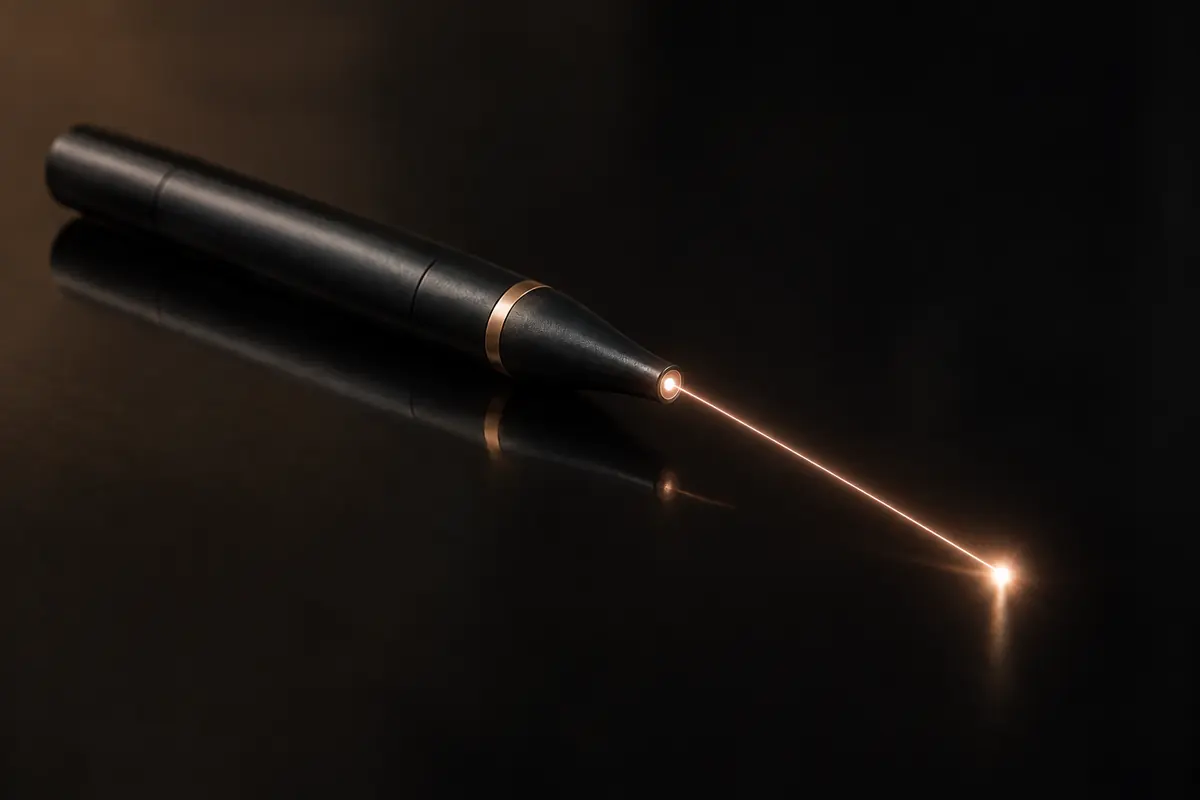
A drill removes tooth substance with a fast-spinning bur. The dental laser uses focused light instead. The tissue absorbs this energy, mainly through the water it contains. Tiny particles of the diseased tissue then break away.
Where the laser light strikes, it produces heat. This heat reduces the number of germs in the treated area and seals small blood vessels in soft tissue. That is why laser surgery causes hardly any bleeding.
At our clinic, we use the laser in four areas.
For tooth decay (caries), the laser can replace the drill. It removes the diseased tooth substance and acts against bacteria in the tooth. This usually makes the treatment barely noticeable. In most cases, it can be done without anaesthesia. A separate page explains when laser treatment is possible without an injection.
Once the decay is gone, we restore the tooth. Read more about fillings after cavity removal. For larger damage, a ceramic restoration may be an option. We make it on site with CEREC.
Bleeding gums are a warning sign. Our dental guide explains the warning signs when your gums bleed that you should take seriously.
Laser gum treatment begins with thorough ultrasonic cleaning of the gum pockets. Then we use the laser. It acts against the bacteria in the pockets. There is hardly any bleeding. We also show you a simple care routine to use at home.
In surgical procedures, the laser helps to limit bleeding. Before a wisdom tooth is removed, we assess its position with digital X-rays. During the procedure, the laser reduces bleeding. Our dental guide explains when a wisdom tooth should come out.
We also use laser technology when placing implants, to keep bleeding to a minimum. Our implant page describes how we use the laser when placing an implant.
Root canal treatment aims to save a tooth with an inflamed root canal. This involves cleaning the canals thoroughly. The laser acts against bacteria in the cleaned canals. Our page on root canal treatment with the laser in Küsnacht explains the whole process.
Dr. med. dent. Susan Oswald-Schütz's area of expertise is laser dentistry. She founded Zahnklinik Küsnacht and is its CEO and medical director. In the team, she is the laser expert. She also holds diplomas in laser assessment and laser safety (Lasersachverständige and Laserschutzbeauftragte) and has worked with the laser for 30 years. Her areas of focus are laser surgery and minimally invasive treatment. She holds the Swiss federal diploma in dentistry and is a member of SSO, SGI, CI and DGZI.
About her team, she says: “I am grateful to work with such an experienced team.”
The team page has more about Dr Susan Oswald-Schütz.

At our clinic, the path to laser treatment has four steps. It starts with an examination.
First, we carefully examine your teeth and gums. We only take an X-ray if needed. Our digital X-rays use around 80 per cent less radiation than conventional methods.
We discuss the findings openly with you. Together, we work out whether the laser is right for your treatment and whether you need an anaesthetic. For local anaesthesia, we also use intraosseous anaesthesia: the anaesthetic goes directly into the bone next to the tooth, so your lip and cheek usually do not go numb.
For tooth decay, the laser removes the diseased tooth substance. We then restore the tooth. In gum treatment and in surgical procedures, the laser causes hardly any bleeding.
After treatment, you receive recommendations for the days that follow. After wisdom tooth removal, we assess the healing at a final check-up. You can take the first step online: request an examination for laser treatment.
The cost of laser treatment depends on the work involved, in other words on the findings and the type of procedure. That is why we discuss it with you in person after the examination.
Dentists in Switzerland bill by tax points (Taxpunkte). Each service has a fixed number of tax points. That number, multiplied by the practice's tax point value (Taxpunktwert), gives the amount. We bill transparently under the Dentotar tariff, with our tax point value of CHF 1.13, and give you open advice on costs.
The compulsory basic health insurance (Grundversicherung) usually does not cover dental treatment. Depending on the policy, supplementary insurance (Zusatzversicherung) may cover part of the cost.
Is your question not listed? Call us or send us an email.
+41 44 915 17 77We use it to remove tooth decay, to treat the gums and in surgical procedures, for example with wisdom teeth and when placing implants. In root canal treatment, it acts against bacteria in the canal. We check at the examination whether the laser is suitable for your tooth.
Yes, because once the decay is removed, the tooth must be restored. The restoration can be a composite filling or, for larger damage, a ceramic crown. We make the crown with CEREC at the clinic in two to three hours. We discuss the right solution with you beforehand.
The laser can support the treatment. First, we clean the gum pockets ultrasonically. The laser then acts against the bacteria in the pockets, with hardly any bleeding. The examination shows whether this makes sense for you.
Dental lasers use visible or infrared light, not ionising radiation as X-ray machines do. The light affects only the spot it is aimed at. To protect the eyes, laser treatment calls for protective glasses with lenses matched to the device's wavelength.
The laser seals small blood vessels and reduces germs, so healing often goes more smoothly. Recovery time depends on the procedure. Following wisdom tooth removal, most patients are back to their daily routine after two to three days.
When treatment without an anaesthetic is possible and what it feels like.
For people who find going to the dentist hard.
Treating decay, filling teeth and restoring them with ceramics.
Our clinic is centrally located in Küsnacht-Goldbach, by the station. Parking is available, and the rooms are accessible by wheelchair and rollator. Our contact page explains how to reach us by S-Bahn or car.
You can request an appointment online or by phone on +41 44 915 17 77. At your first appointment, we check whether the laser is an option for you.